







The Story of Dobrna
More than six centuries of water, nature, and people
In Dobrna, history is not just a memory of the past. It flows in the thermal water, is leads through the Spa Park, and it remains written in the architecture and stories of the people who sought health, peace, and inspiration here.
From the first written mention in 1403 until today, much has changed. But the essence of Dobrna remains the same: a place where one takes time for oneself.
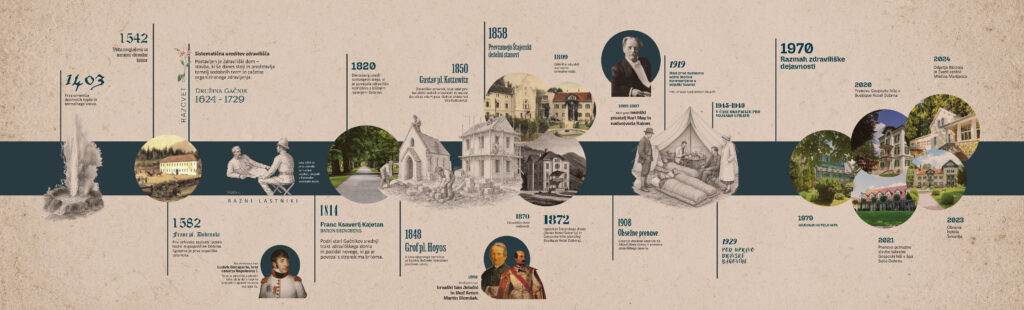
1403
The beginning of the written story
In 1403, the Dobrna spa and thermal spring appear in written sources for the first time. The water, which would shape the life of Dobrna through the centuries, thus also becomes part of its written history.
1624
A spa grows by the spring
The year 1624 is considered one of the key milestones in the history of Dobrna. At that time, Matija Gačnik built the first spa building by the thermal spring, thus laying the foundations for the organised development of the health resort.
Above the bathing pool, he set a marble inscription plaque, which is still preserved in the main Spa building today. Under the Gačnik family, later Schlangenburg, Dobrna gradually began to grow from a place with a healing spring into a recognisable health resort, attracting more and more guests from the wider region.
1814–1855
Dobrna steps onto the spa map
In 1814, Franc Ksaverij Kajetan noble Dienersberg took over Dobrna. He transformed the Spa House and in 1820 arranged the chestnut avenue, from which today’s Spa Park began to develop.
In the middle of the century, under Count Hoyos, a new spa hall, baths, paths, and resting places followed. In 1850, Dr. Gustav noble Kottowitz published the first tourist guide to Dobrna, and a few years later built today’s Vila Higiea.
During this period, Mlečna Marijanca also came to life, where guests were offered whey, milk, coffee, and chocolate.
1853
When Dobrna resounds
In 1853, Johann Strauss Jr. recovered from an illness in Dobrna. During his stay in what was then Bad Neuhaus bei Cilli, the Die Neuhauser-Polka was created, named after the health resort.
It was performed for the first time on 18 September of the same year in Vienna.
For a moment, the peace of Dobrna moved into the music.
1872–1908
The golden age of the spa
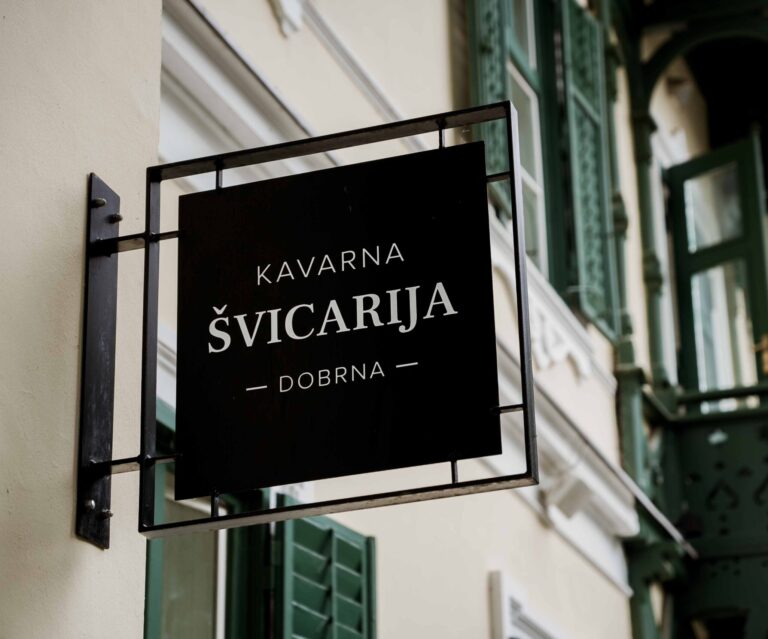
In 1872, the Švicarski dvor (meaning “Swiss Court”) was built, today’s Hotel Švicarija, and the health resort took on an increasingly recognisable image.
In 1899, the Klementina spring was discovered, and in 1908, the spa pool was renovated, and a glass veranda was built.
Dobrna became a place where guests no longer came only for the water, but also for walks, music, socialising, and the spa lifestyle.
20th century
From a health resort to a modern thermal centre
Through wars, new states, and new generations of guests, Dobrna maintained its spa role and gradually entered a more modern period of development. The spa offer has expanded, guest needs have changed, and in addition to thermal water, medical services, more comfortable stays, and modern tourist infrastructure have gained an increasingly important role.
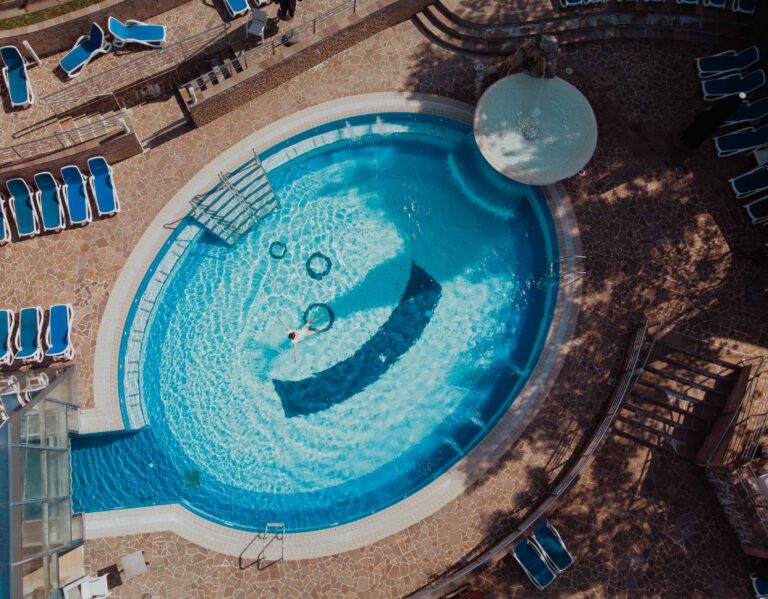
An important milestone was 1979, when Hotel Vita was built with a thermal pool, a medical centre, and spaces for socialising and culinary delights. With it, Dobrna took a big step towards becoming a modern spa and thermal centre, and began a new chapter in its development.
2020–present
Heritage that lives on
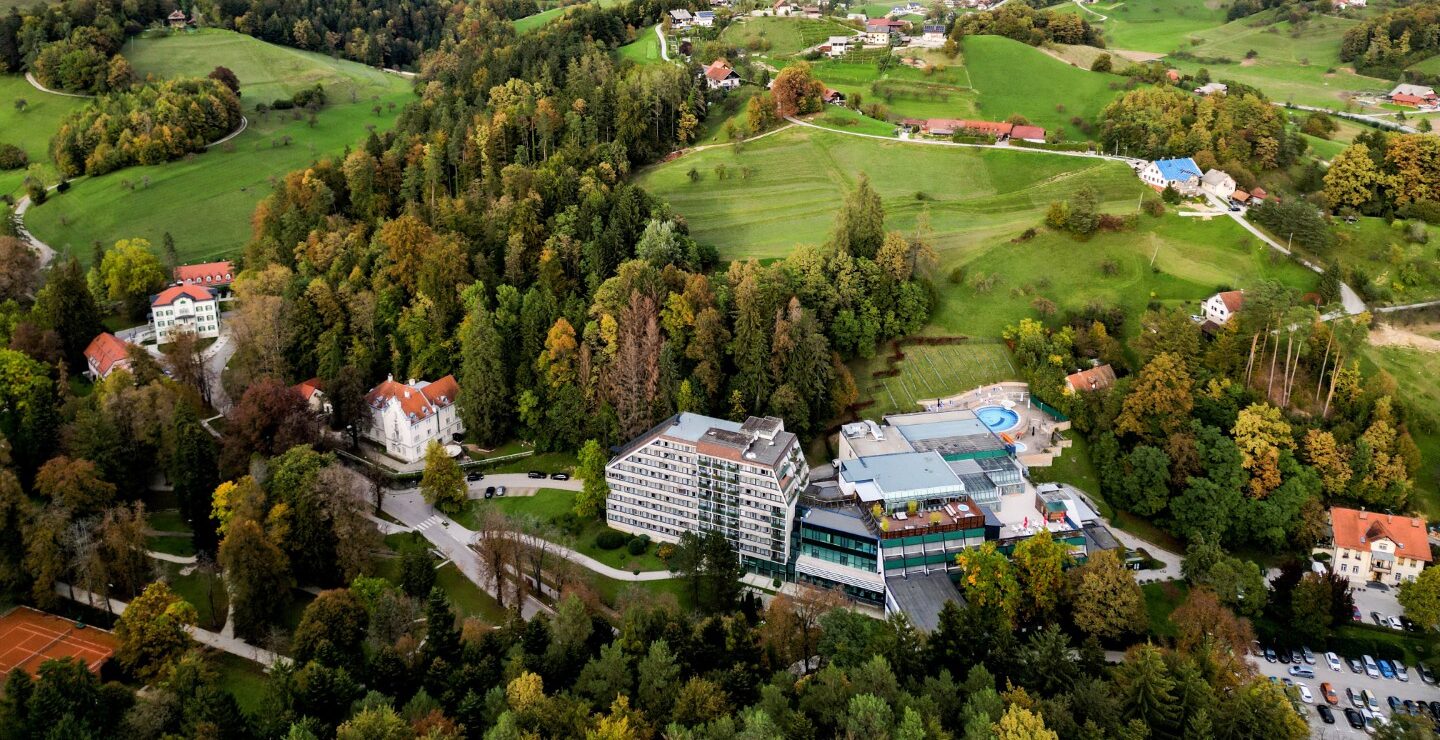
In recent years, the historical buildings of Dobrna have been given a new life. Boutique Hotel Dobrna and Vila Higiea today combine historical character with modern living, and in 2024, Mlečna Marijanca also came back to life.
More than six centuries after the first written mention, the thermal spring remains the heart of Dobrna. Today, health, wellness, cuisine, historical accommodations, and the Spa Park are intertwined around it.
Times change. But the reasons for coming to Dobrna remain similar: health, nature, peace, and time for oneself.